
In 2016, SEO was about keywords and backlinks. In 2020, it shifted toward intent and experience. By 2026, SEO has matured into something deeper, focusing on trust, visibility, and real-world authority, especially for local businesses competing in increasingly AI-driven search ecosystems.
Search engines are no longer just ranking pages. They are answering questions, recommending businesses, and guiding purchase decisions, often without sending traffic. This evolution forces businesses to rethink what visibility truly means in modern search environments.
For local businesses in India and abroad, SEO in 2026 is no longer optional. It is foundational infrastructure. Google Business Profile, AI Overviews, voice search, and brand authority now define who gets discovered and who disappears.
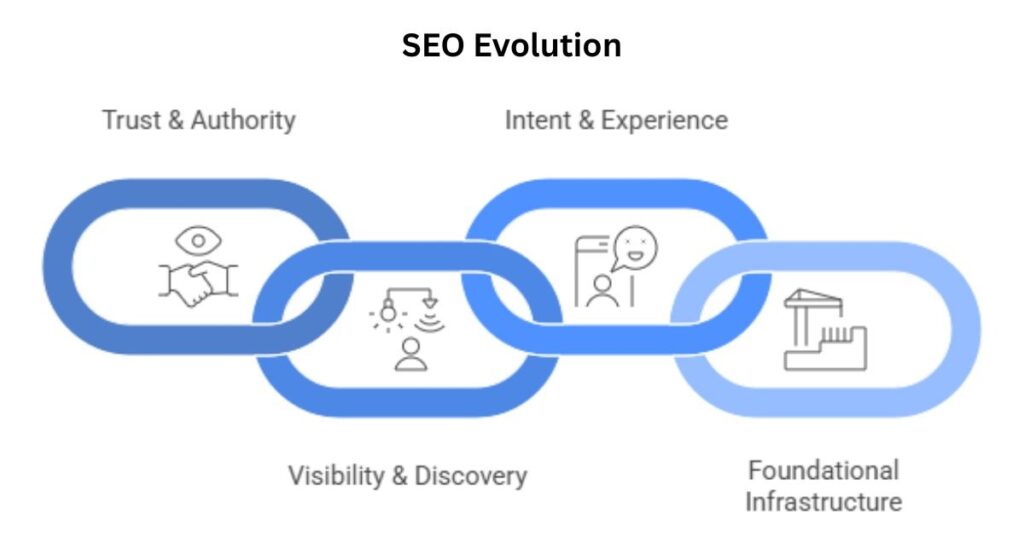
This guide breaks down the 12 SEO Trends for 2026, that will shape rankings, leads, and revenue, especially for local brands that depend on regional visibility, trust signals, and real customer intent .
Table of Contents
1. Brand Citations Will Matter More Than Backlinks
Backlinks once dominated SEO conversations. In 2026, their influence is steadily declining in favor of brand citations, unlinked mentions across authoritative platforms that validate real-world business existence and reputation.
AI systems evaluate how frequently and credibly a brand is mentioned across the web. Mentions in news portals, business listings, industry publications, and local directories contribute to authority more than random link placements.
For local businesses, citations across Google Business Profile, Justdial, Clutch, industry associations, and verified media listings directly influence trust signals used by AI-driven search engines.
2. Keywords Are Dead; Topics and Intent Rule
Search engines no longer assess pages based on keyword density. Instead, AI models evaluate whether content fully satisfies search intent across an entire topic, not just a single query.
In 2026, ranking depends on topic completeness. Businesses must demonstrate that they understand a subject deeply, covering definitions, use cases, objections, FAQs and local relevance within one structured content ecosystem.
This shift makes content clustering essential, especially for local SEO pages that must answer location-specific queries comprehensively rather than repeating city-based keywords artificially.
3. AI Overviews Will Reduce Clicks but Increase Brand Exposure
Google’s AI Overviews are reshaping user behavior. Instead of clicking multiple links, users receive synthesized answers directly in search results, reducing traditional organic click-through rates.
However, businesses featured inside AI Overviews gain brand exposure, authority, and recall, even without direct visits. In 2026, being referenced matters more than being clicked.
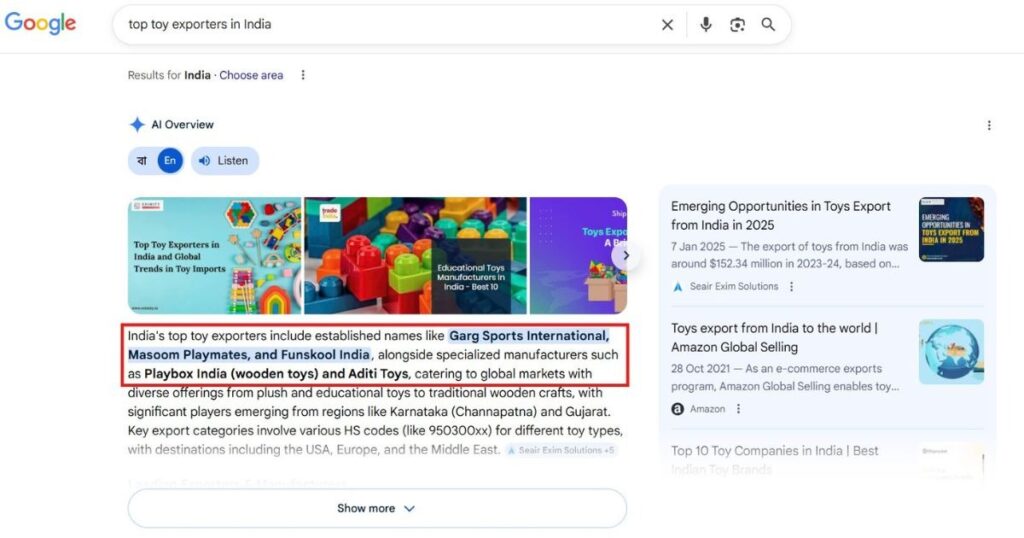
Local businesses optimized with structured data, strong GBP signals, and authoritative content have higher chances of appearing in AI Overviews for service-based queries .
4. Google Business Profile Becomes the Core SEO Asset
Websites support SEO in 2026, but Google Business Profile leads it. GBP is now the primary interface through which users discover, evaluate and contact local businesses.
Photos, reviews, Q&A responses, services, posts and real-time updates influence rankings more than static website pages. Google increasingly trusts GBP data as a real-world validation layer.
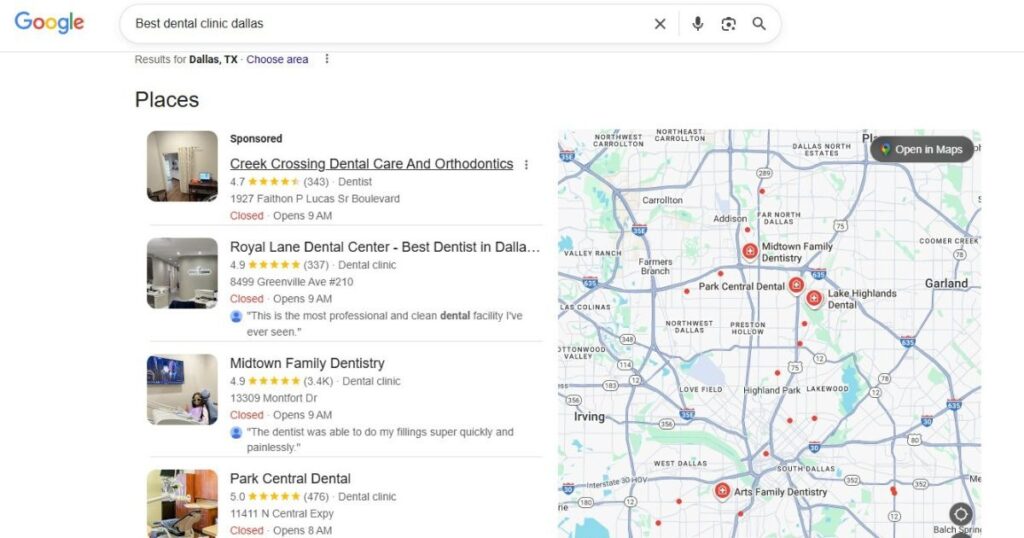
For local businesses, optimizing GBP is no longer a task, it is a continuous strategy that directly impacts calls, directions and conversions .
5. Community Platforms Are Losing Ranking Power
Platforms like Reddit and Quora experienced visibility spikes in earlier years. By 2026, their influence is fading due to content saturation, inconsistent expertise and limited verification.
AI models now prioritize expert-authored, credential-backed content over anonymous discussions. User-generated answers lack accountability and long-term trust signals.
Businesses must shift away from relying on community platforms and instead publish authoritative content on verified domains with clear author expertise and brand ownership.
6. Voice Search Will Create Winner-Takes-All Local Markets
Voice-based AI search changes competition dynamics entirely. When users ask for “the best nearby dentist” or “top digital agency near me,” only few answers are spoken.
This creates winner-takes-all outcomes. Ranking lower is equivalent to invisibility. Optimization must focus on conversational queries, natural language answers and local intent signals.
Google Business Profile accuracy, review sentiment, and clear service descriptions become decisive ranking factors in voice-driven discovery.
7. LLMs Are Becoming Transaction Endpoints
Large Language Models are no longer just information providers. With embedded payments and commerce integrations, AI platforms like ChatGPT, now facilitate direct transactions.
Users can book services, purchase products, or schedule consultations without leaving AI interfaces. SEO success increasingly depends on being selectable, not clickable.
Local businesses must prepare for AI-native conversions by structuring service data, pricing clarity and availability signals for machine-readable consumption.
8. AI Ads Will Reshape Organic Visibility
Just as Google Ads reshaped search results decades ago, AI platforms are introducing paid placements within AI responses. Organic brand visibility will increasingly compete with sponsored AI results.
Early adopters will benefit most. Businesses must test AI-driven ad formats while strengthening organic authority to avoid complete dependency on paid visibility.
Local businesses should balance GBP optimization, organic authority, and selective AI and experimentation to maintain sustainable discovery pipelines.
9. E-E-A-T Becomes Non-Negotiable
Experience, Expertise, Authoritativeness and Trustworthiness (E-E-A-T) are no longer guidelines, they are enforcement mechanisms. AI systems actively suppress content lacking real-world credibility.
Local businesses must showcase real experience through reviews, case studies, staff credentials, certifications and transparent business information across platforms.
E-E-A-T signals embedded in GBP, websites, and citations directly influence inclusion in AI summaries and local recommendations.
10. ToFu Content Will Decline in Value
Generic “What is…” content is increasingly obsolete. like , “What is SEO?”
AI can already generate basic explanations instantly, making top-of-funnel informational pages less valuable.
SEO in 2026 focuses on decision-stage content, comparisons, local relevance, service breakdowns, pricing explanations and trust validation.
Local businesses must shift content strategy toward problem-solving and intent-driven narratives that AI cannot replace with generic summaries.
11. Indexing Will Become Selective, Not Guaranteed
Google will index fewer pages as AI Overviews reduce dependency on traditional crawling. Thin, redundant or low-value pages may never be indexed at all.
SEO strategies must prioritize index-worthy content, pages or blogs, that offer unique insights, structured clarity and strong engagement signals.
For local SEO, this means fewer pages but higher-quality service, location and authority pages that justify inclusion in search indices.
12. SEO KPIs Will Shift From Traffic to Business Impact
Traffic alone is no longer a success metric. In 2026, SEO performance is measured through calls, form submissions, bookings, store visits and revenue attribution.
Local businesses must track phone calls, direction requests, GBP interactions, and assisted conversions rather than organic sessions alone.
SEO teams must align reporting with real business outcomes, providing tangible ROI rather than vanity metrics.
Finally, SEO in 2026 is no longer about ranking everywhere. It is about being chosen decisively by AI systems, voice assistants and local search interfaces.
For local businesses, success depends on Google Business Profile dominance, trusted brand citations, structured expertise and intent-aligned content ecosystems.
Those who adapt early will own visibility. Those who delay will compete in shrinking digital shadows.
Friends, If you are serious about future-proofing your local SEO strategy, Technical Kalyan is built for you.
This SEO & AI knowledge-driven blog focuses on Local SEO, Google Business Profile mastery, and AI-ready optimization, specifically designed to help local businesses in India and abroad thrive in 2026.
To understand how the SEO trends change, explore:
Start preparing today, because SEO in 2026 rewards those who act before others react.
FAQs on SEO Trends for 2026
1. Is SEO still important in 2026 for local businesses?
A: Yes. SEO in 2026 is more important than ever, especially for local businesses. While clicks may decline, visibility through Google Business Profile, AI Overviews, and voice search directly drives calls, visits, and bookings rather than just website traffic.
2. Are backlinks still useful for SEO in 2026?
A: Backlinks still matter, but they are no longer the primary ranking factor. Brand citations, unlinked mentions, reviews, and consistent business information across trusted platforms now play a larger role in establishing authority and trust.
3. What is replacing keywords in modern SEO?
A: Topics and search intent have replaced keywords. Search engines now evaluate whether content fully answers a user’s question, covers related subtopics, and matches real-world intent rather than repeating specific phrases.
4. How do AI Overviews affect organic traffic?
A: AI Overviews reduce traditional clicks by answering questions directly in search results. However, businesses featured in these summaries gain strong brand visibility, authority, and recall, which influences buying decisions even without website visits.
5. Why is Google Business Profile so important in 2026?
A: Google Business Profile has become the core SEO asset for local businesses. Reviews, photos, services, posts, and accurate updates influence discovery, rankings, and conversions more than many website pages.
6. Does voice search really impact local SEO?
A: Yes. Voice search creates winner-takes-all results. When users ask for nearby services, only a few businesses are recommended. Strong reviews, clear service descriptions, and accurate local data determine who gets chosen.
7. What does E-E-A-T mean for small businesses?
A: E-E-A-T stands for Experience, Expertise, Authoritativeness and Trustworthiness. For local businesses, this means showing real reviews, credentials, case studies, staff expertise, and transparent business information across platforms.
8. Is informational blog content still useful for SEO?
A: Generic top-of-funnel content like basic definitions is losing value. SEO now favors decision-stage content such as service explanations, comparisons, pricing clarity, and location-specific problem solving.
9. Will Google index all website pages in the future?
A: No. Indexing is becoming selective. Thin, repetitive, or low-value pages may not be indexed at all. Businesses should focus on fewer but higher-quality pages that offer unique insights and real value.
10. How should SEO success be measured in 2026?
A: SEO success is measured by business impact, not traffic alone. Calls, form submissions, bookings, direction requests, and revenue attribution are now the primary KPIs for SEO performance.

Kolkata-based SEO consultant and AI Search specialist with 7+ years of experience helping businesses improve their online visibility and organic growth. He specializes in Local SEO, Google Business Profile optimization, AEO, and GEO. With 70+ successful projects across India and international markets, Kalyan helps businesses build stronger visibility across Google Search, Google Maps, ChatGPT, Perplexity, Gemini, Claude, and other AI-powered search platforms. Through Technical Kalyan, he focuses on practical, sustainable search strategies that help local and service-based businesses attract more relevant customers and stay competitive as search continues to evolve in the AI era.