

Two years ago, I thought SEO was dead.
Google’s algorithm updates were tanking my blog traffic overnight. Clients were pulling budgets. And everyone on LinkedIn was chanting the same line: “AI is going to replace SEO.” I believed it too, for about three months.
Then I noticed something strange. The creators who were actually winning weren’t fighting AI; they were feeding it. They’d stopped writing purely for Google and started writing for ChatGPT, Perplexity, Gemini, and even LinkedIn’s own AI-driven search.
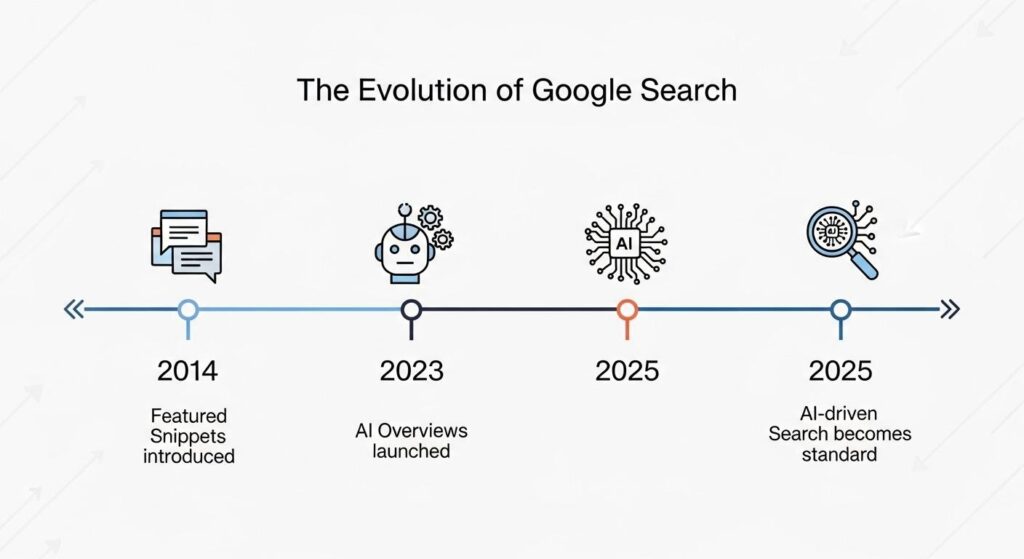
That’s when it clicked; SEO didn’t die. It evolved into AI SEO.
Table of Contents
Why SEO Didn’t Die, It Evolved Into AI SEO
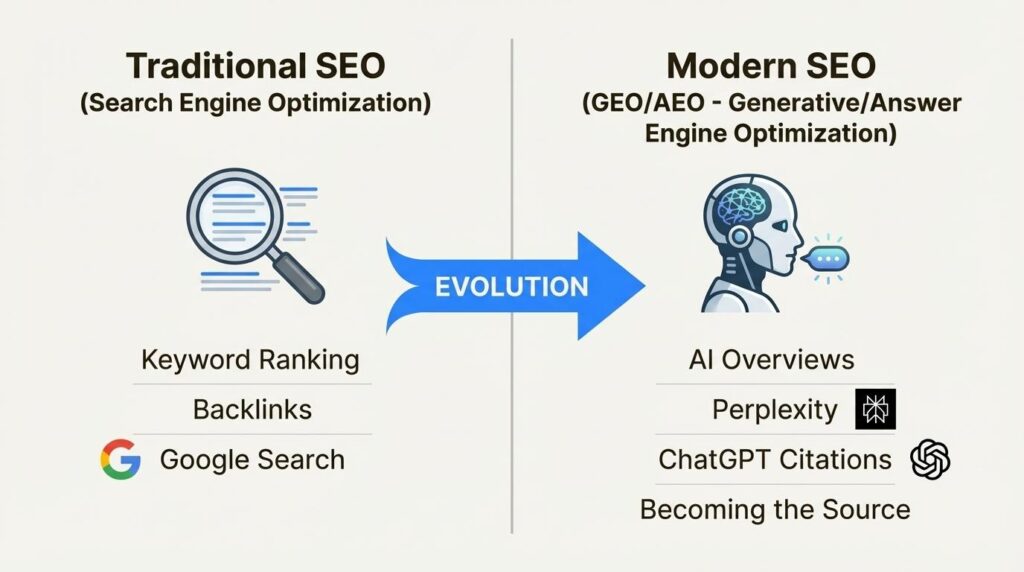
The old playbook is being rewritten in real time, and the shift is bigger than most marketers realize:
- Keywords still matter, but context and intent matter more.
- Backlinks have taken a back seat to entity recognition and topical authority.
- Ranking #1 on Google is worth less than being cited directly inside an AI answer.
- LinkedIn’s algorithm now behaves like a mini search engine, rewarding content built for discovery, not just engagement.
Once I rebuilt my entire content system around one question, “Will AI find this, understand this, and recommend this?” everything changed. LinkedIn impressions grew 15x in six months. I started getting cited inside ChatGPT answers for my niche. Inbound leads doubled without spending a single rupee on ads.
The secret wasn’t working harder. It was prompting smartly.
What Makes These AI SEO Prompts Different in 2026
Most SEO prompt lists floating around the internet are recycled keyword-research templates from 2021 with “AI” slapped on the title. The prompts below are built specifically for a world where you’re optimizing for Google, ChatGPT, Perplexity, Gemini, and LinkedIn search at the same time.
Each one is designed to do a specific job in your content pipeline, from research to publishing to repurposing, so you’re not just creating content, you’re engineering visibility.
The 10 AI SEO Prompts That Actually Work in 2026
1. Keyword Cluster Builder
Use this to map out an entire topic instead of chasing single keywords. Feed your seed keyword to an AI model and ask it to generate a pillar keyword, eight supporting long-tail keywords, five “People Also Ask”-style questions, and five AI search queries people would actually type into ChatGPT or Perplexity, grouped by search intent (informational, commercial, and transactional).
2. Search Intent Analyzer
Before you write a single word, decode what the searcher truly wants. This prompt asks for the dominant intent behind a keyword, what users really want to know, the top three content formats that currently rank, five sub-questions your article must answer, and what an AI search engine like Perplexity would likely cite as the ideal answer.
3. AI-Optimized Article Outline
This turns raw research into a ready-to-write skeleton: an H1 with the target keyword, six to eight H2 sections built around semantic keywords, two to three H3 subpoints under each, a five-question FAQ section optimized for AI overviews, and a TL;DR summary at the top so AI crawlers can parse your article instantly.
4. LLM Citation Optimizer
Getting cited by ChatGPT or Google AI Overviews is its own skill. This prompt rewrites a paragraph using clear declarative statements, specific numbers and stats, named entities, and a question-answer structure while stripping out fluff, hedging, and passive voice.
5. Featured Snippet Hijacker
Featured snippets are still prime real estate. Ask the AI to identify the exact format Google currently ranks for your query (paragraph, list, or table); write a 40-60-word answer designed to replace it, generate three alternative structures; and suggest the H2 heading to place directly above it.
6. Competitor Gap Analysis
Paste in your top three competitors’ URLs or content and let AI surface what all of them cover (so you don’t miss the basics), the gaps none of them address, the questions they answer poorly, and a genuinely unique angle that positions your article as the best result for both Google and AI search.
7. Entity & Semantic SEO Enhancer
This is where topical authority is built. Feed in your draft and ask for the main entities already present, related entities you should add, ten missing semantic (LSI) keywords, internal linking opportunities, and the schema markup types worth implementing.
8. Meta Title & Description Generator
Generate five SEO-optimized title and description combinations for your target keyword. Titles should stay under 60 characters with the keyword near the front, and descriptions should run 140 to 155 characters with an implicit call to action, ranked from highest to lowest predicted click-through rate.
9. Content Refresh Audit
For posts stuck on page two, this prompt audits outdated information, thin sections needing expansion, missing sub-topics competitors already cover, weak E-E-A-T signals, opportunities to add original data or quotes, and how to restructure the piece for AI overview inclusion, all wrapped up in a prioritized action list.
10. Multi-Platform SEO Repurposer
One blog post should never live in one place. This prompt repurposes it into a LinkedIn-search-optimized long-form post; a YouTube title, description, and tag set; a Quora or Reddit answer that links back naturally; an FAQ schema block; and an X thread built for X’s own search, all while keeping your primary keyword consistent across every version.
How to Stack These Prompts for Maximum Results
Don’t use these in isolation. The real leverage comes from sequencing them. Run the Keyword Cluster Builder, then the Search Intent Analyzer, then the AI-Optimized Article Outline, in that exact order, for every new article you publish. Stacking these three alone will put you ahead of roughly 90% of competitors who still treat SEO as a single-step task.
A Simple Weekly Workflow
- Monday: Run prompts #1 and #2 to plan the week’s content.
- Tuesday to Wednesday: Draft using prompt #3, then tighten citation-worthy paragraphs with #4.
- Thursday: Run #5, #6, and #7 to sharpen competitiveness and topical depth.
- Friday: Finalize with #8, audit older posts with #9, and repurpose with #10.
Final Thoughts: The New Rules of Visibility
The next era of SEO isn’t about ranking #1 on Google anymore. It’s about becoming the answer that AI picks first, on Google, inside ChatGPT, on Perplexity, on Gemini, and across LinkedIn’s own search. The creators and brands who understand this shift early aren’t just surviving the AI era of search; they’re compounding an unfair advantage while everyone else waits for their rankings to bounce back.
Steal these prompts. Test them in your next article. Watch what happens.
Ready to Make AI Search Work for Your Brand?
At Technical Kalyan, we help creators, founders, and businesses build content systems that get discovered by Google, ChatGPT, Perplexity, and Gemini, not just one search engine. Explore our services.
If you’re ready to stop guessing and start engineering your visibility, connect with Technical Kalyan today for AI SEO strategy, content systems, and hands-on implementation support that actually moves the needle.
👉 Follow Technical Kalyan for more AI SEO breakdowns, prompt frameworks, and real growth case studies, and reach out to start building your AI-first content system now.
FAQs on AI SEO Prompts
Q. What are AI SEO prompts?
A: AI SEO prompts are structured instructions that help AI tools like ChatGPT, Gemini, and Perplexity generate SEO-friendly content, improve search intent targeting, optimize keywords, and increase the chances of ranking in both traditional and AI-powered search engines.
Q. How do AI SEO prompts improve search rankings?
A: AI SEO prompts help create well-structured, intent-focused, and entity-rich content that aligns with Google’s ranking factors and AI search engines. They also improve topical authority, featured snippet opportunities, and AI citation potential.
Q. Which AI tools can I use with these SEO prompts?
A: These prompts work with popular AI platforms such as ChatGPT, Google Gemini, Claude, Perplexity AI, Microsoft Copilot, and other large language models that assist with content creation and SEO.
Q. Are AI SEO prompts better than traditional keyword research?
A: AI SEO prompts don’t replace keyword research. Instead, they enhance it by combining keywords with search intent, semantic entities, user questions, and AI-friendly content structures, making your content more competitive in 2026.
Q. Can beginners use AI SEO prompts effectively?
A: Yes. Even beginners can use AI SEO prompts to plan content, create article outlines, optimize meta tags, identify content gaps, and repurpose content across multiple platforms without advanced SEO expertise.

Kolkata-based SEO consultant and AI Search specialist with 7+ years of experience helping businesses improve their online visibility and organic growth. He specializes in Local SEO, Google Business Profile optimization, AEO, and GEO. With 70+ successful projects across India and international markets, Kalyan helps businesses build stronger visibility across Google Search, Google Maps, ChatGPT, Perplexity, Gemini, Claude, and other AI-powered search platforms. Through Technical Kalyan, he focuses on practical, sustainable search strategies that help local and service-based businesses attract more relevant customers and stay competitive as search continues to evolve in the AI era.